

Airway DentistryIn Elmhurst
The Missing Piece in Most Dental Checkups: How You Breathe, Sleep, and Grow
Most dental visits check your teeth and gums. At SmileWise Dentistry, Dr. Reem Akel also checks your airway — the path from your nose and mouth to your lungs. How that airway develops and functions affects how you breathe, how you sleep, and for children, how their face and jaw grow. Airway dentistry looks at all of it, not just cavities.
What Is Airway Dentistry?
Airway dentistry is a wellness-focused approach that looks beyond teeth and gums to how your jaw, tongue, and breathing work together. The position of your jaw, the width of your palate, the way your tongue rests, and whether you breathe through your nose or mouth all influence whether air moves freely through your body — especially at night.
Left unaddressed, airway problems show up as fatigue, teeth grinding, headaches, crowded teeth, snoring, and — in children — behavior and focus issues that get mistaken for something else entirely. Dr. Akel screens for airway health at every visit, for every patient, because a healthy mouth and a healthy airway go hand in hand.
Is Mouth Breathing a Problem in Your Home?
Mouth breathing isn't a harmless habit — it's a sign that something is interfering with normal nasal breathing, and it affects kids and adults differently.
In children, watch for:
* Lips parted at rest, or an open mouth during sleep
* Snoring or restless, tossing-and-turning sleep
* Dark circles under the eyes despite a full night's sleep
* Crowded or narrow teeth — often a clue about a narrow palate, not just genetics
* Trouble focusing, irritability, or behavior that looks more like ADHD than a sleep issue
In adults, watch for:
* Waking up tired no matter how many hours you slept
* A partner mentioning snoring or gasping at night
* Morning headaches or a sore jaw
* Worn or flattened teeth from nighttime grinding
* Dry mouth or a sore throat on waking
* Anxiety that doesn't go away
None of these signs alone is cause for alarm. Together, they tell a story about your airway — and they're exactly what Dr. Akel screens for at every visit.

Pediatric Jaw Development: Why We Watch the "Golden Window"
By age 6, nearly 60% of a child's facial growth is already complete. That makes early childhood the best — and often only — window to guide jaw development gently, before the bones fuse and the only remaining options are more invasive.
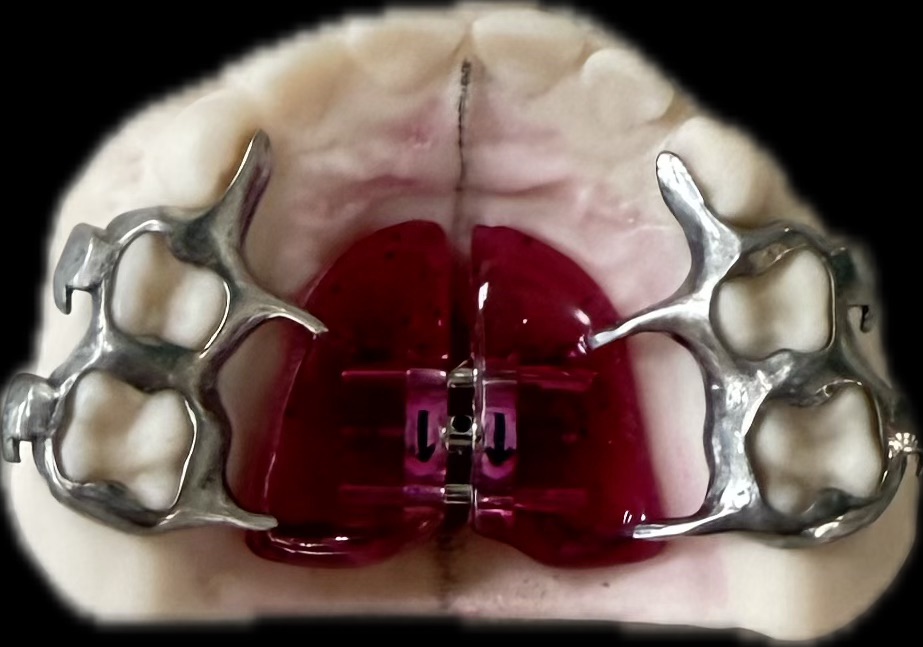
A narrow palate or underdeveloped jaw doesn't just crowd teeth. It physically narrows the airway, which is why so many "orthodontic" problems are actually airway problems wearing a dental disguise. When we catch this early, we can widen the palate, guide the jaw forward, and open up airway space — often preventing the need for extractions, headgear, or jaw surgery later on.
This is the exact work we do on our Interceptive Orthodontics page — palatal expanders, early-phase aligners, and myofunctional therapy support for children roughly ages 4 to 6.

Sleep: The Connection Most Dentists Miss
For adults, airway issues usually show up at night. Snoring, waking up gasping, grinding your teeth, or simply never feeling rested are all signs that your airway may be collapsing during sleep — a spectrum that ranges from mild snoring to obstructive sleep apnea.
Dentists can't diagnose sleep apnea medically, but Dr. Akel is trained to recognize the warning signs in your mouth — worn enamel, a scalloped tongue, a small jaw, or a soft palate that narrows your airway — and to refer you for a formal sleep study when appropriate. For patients with mild-to-moderate sleep apnea, or anyone who can't tolerate a CPAP machine, we offer custom oral appliance therapy: a discreet, portable device that gently shifts your jaw forward to keep your airway open all night, no mask or hose required.
The SmileWise Approach: Wellness Dentistry for the Whole Family
Dr. Reem Akel built SmileWise Dentistry around a simple idea: a dental visit should leave you with more than a clean smile — it should leave you with answers. A VCU School of Dentistry graduate and member of the American Academy of Clear Aligners, Dr. Akel has pursued additional training specifically in airway-focused dentistry, a specialty most dental programs barely touch. She has completed hundreds of hours of airway focused continuing education including with ASAP Pathways and the renowned Dr. Marianna Evans.
Because airway health rarely stays in one lane, we also partner with a hand-picked network of ENTs, myofunctional therapists, allergists, and body-work specialists to support your whole-body results — not just your teeth.

Frequently Asked Questions About Airway Dentistry
What is an airway-focused dentist?
An airway-focused dentist evaluates how your jaw, tongue, and breathing work together — not just your teeth and gums. At SmileWise, that means screening every patient for mouth breathing, jaw development, and sleep-related warning signs at every visit.
Does my dentist check for sleep apnea?
Most dentists don't test for sleep apnea, but an airway-focused dentist like Dr. Akel screens for the signs — worn teeth, a scalloped tongue, mouth breathing, or a small jaw — and refers you for a formal sleep study when warranted.
Is my child's mouth breathing a big deal?
Yes. Mouth breathing signals that something is interfering with normal nasal breathing, from enlarged tonsils to a narrow palate. Left alone, it can affect facial development, sleep quality, and behavior. If your child breathes through their mouth consistently, an airway evaluation is worth it.
Can a dentist actually help with sleep problems?
Dentists can't diagnose sleep apnea, but they can identify warning signs, provide oral appliance therapy for mild-to-moderate cases, and coordinate care with your sleep physician — often as a more comfortable alternative to CPAP.
When should my child be evaluated for airway and jaw development?
Ideally between ages 3 and 6, while the jaw is still growing and most responsive to gentle guidance. This is the window in which interceptive orthodontics has the biggest impact.
Ready to Breathe, Sleep, and Smile Better?
Whether it's your child's mouth breathing, your own restless nights, or you're just not sure what to ask — an airway screening at SmileWise starts the conversation. New and existing patients can add an airway evaluation to any visit.
FaQ's
Frequently Asked Questions
Check out these frequently asked questions, or call us to speak with our team.
