

Curodont: The Non-Invasive Alternative to Fillings at SmileWise Elmhurst
Curodont: The Non-Invasive Alternative to Fillings at SmileWise Elmhurst
You come in for a routine cleaning. Your dentist spots something — a soft spot, a white lesion, a shadow on the X-ray. And then comes the phrase most people dread: "You might need a filling."
But what if you didn't? What if there was a way to reverse that early decay before it becomes a cavity that needs drilling?
At SmileWise Dentistry in Elmhurst, IL, we offer something most dental practices in DuPage County don't: Curodont Repair — a clinically proven, biomimetic remineralization treatment that can stop and reverse early-stage cavities without anesthesia, without drilling, and without removing any of your natural tooth structure.
This blog explains exactly what Curodont is, how it works, who it's right for, and why we believe it represents the future of preventive dentistry.
What Is Curodont, and How Does It Work?
Curodont Repair is a treatment developed by the Swiss company credentis. It uses a peptide-based technology called P11-4, a self-assembling peptide that penetrates deep into the early lesion on your tooth's enamel and creates a scaffold — a framework — that your body uses to deposit new minerals.
In simpler terms: Curodont tells your tooth to rebuild itself.
Teeth naturally have some capacity to remineralize. Saliva carries calcium and phosphate ions that can re-harden softened enamel, which is why fluoride treatments have long been used to boost that process. But natural remineralization has limits — it mostly works on the surface. Curodont's peptide technology goes inside the lesion, down into the subsurface enamel, and creates a scaffold that promotes mineral deposition from within.
The result is enamel that is structurally rebuilt, not just coated.
What the Clinical Research Shows
Curodont is not a new or experimental treatment. It has been available in Europe for over a decade and has been studied extensively in peer-reviewed clinical trials:
- A randomized controlled trial published in Caries Research found that Curodont Repair significantly increased remineralization of early enamel lesions compared to placebo at 3 and 6 months
- Studies show that early interproximal (between-the-tooth) lesions treated with Curodont can arrest or regress in 70–80% of cases
- A 2016 study in the Journal of Clinical Dentistry demonstrated statistically significant improvement in lesion hardness with no adverse effects
Dr. Reem Akel, who trained at VCU School of Dentistry and stays current with advances in biomimetic and wellness dentistry, integrates Curodont into SmileWise's broader philosophy: treat the minimum necessary, preserve as much natural tooth structure as possible, and give your body the tools to heal itself where it can.
Who Is a Good Candidate for Curodont?
Curodont works best for early-stage cavities — specifically, lesions that haven't yet broken through the enamel surface. In dental terms, these are called:
- Initial enamel caries
- White spot lesions — those chalky or opaque areas you might notice near the gumline or between teeth
- Early interproximal lesions — decay forming in the tight spaces between teeth, often caught on X-rays before symptoms develop
If your dentist has told you that you're "watching a spot" or that you have "pre-cavity activity," that is exactly the window where Curodont is most effective.
Curodont is likely a good fit if:
- You've been told you have early decay or a soft spot that "could turn into a cavity"
- You have white spot lesions from orthodontic treatment (especially after Invisalign or braces)
- You want to avoid drilling, anesthesia, or having a filling placed
- You're committed to improving your home care alongside treatment
- You're pregnant or prefer to minimize dental interventions where possible
- You have dental anxiety and want to avoid invasive procedures
Curodont is not a substitute for a filling if:
- The cavity has already progressed through the enamel into dentin
- The lesion has an open cavitation (a physical hole in the tooth)
- There is active infection or abscess
At SmileWise, we always give you an honest assessment. If a tooth genuinely needs a filling, we'll tell you that. But if there's a real opportunity to treat conservatively, we will always offer it.
What to Expect: The Curodont Treatment Process
One of the reasons patients in Elmhurst and across DuPage County appreciate Curodont is how simple and comfortable the appointment is compared to a traditional filling.
Here's what a typical Curodont appointment looks like at SmileWise:
Step 1 — Assessment and documentation Dr. Akel will use a combination of clinical examination, X-rays, and — where appropriate — laser cavity detection to confirm that the lesion is at the right stage for Curodont treatment. She'll document the baseline appearance of the lesion so we can track progress at your next visit.
Step 2 — Professional cleaning and tooth preparationThe tooth surface is professionally cleaned and conditioned. This step is quick and requires no injections or drilling.
Step 3 — Curodont application The Curodont Repair gel is applied directly to the lesion. It stays in contact with the tooth for a specific dwell time, allowing the P11-4 peptides to self-assemble and penetrate the lesion.
Step 4 — Protective sealing (where appropriate)In some cases, Dr. Akel may apply a protective fluoride varnish or sealant to maximize the treatment environment.
Step 5 — Monitoring and follow-up Curodont is not a one-and-done treatment. You'll return for monitoring appointments — typically at 6 months — so we can assess remineralization progress. Many patients see measurable hardening and reduction in lesion size within that window.
The entire active appointment takes 20–30 minutes, requires no anesthesia, and causes no discomfort.
Curodont vs. Traditional Fillings: An Honest Comparison
We want to be completely transparent about what Curodont is and isn't, because we think you deserve to make an informed choice.
Curodont Traditional Composite Filling
Best for:L Early enamel lesions (pre-cavity). Cavities that have broken through enamel
Drilling required: No. Yes
Anesthesia needed: No Usually yes
Natural tooth preserved: Yes — 100%. Some healthy tooth removed
Time in chair: ~20–30 minutes. ~45–60 minutes
Reversibility: N/A (promotes natural repair). Filling will need replacement over time
Follow-up needed: Yes — monitoring at 6 months. Standard recall schedule
Cost: May require out-of-pocket payment. Often covered by insurance
One important note on cost: because Curodont is a newer treatment in the U.S., dental insurance coverage varies. Some plans cover remineralization treatments; others classify them as elective. We'll always go over your specific coverage before you commit.
Why SmileWise Takes a Different Approach to Cavities
At most dental practices — in Elmhurst and beyond — the standard response to early decay is to "watch and wait," and then fill it when it gets worse. That's not negligence; it's standard of care. But it's also the reason many patients end up in a cycle of fillings, replacements, and eventually crowns.
SmileWise is built on a different philosophy: the least invasive treatment that achieves the best long-term outcome.
That's why Dr. Akel invested in offering Curodont. It's why she spends time at your hygiene visit reviewing not just your teeth, but your diet, your saliva health, your home care routine — the actual drivers of cavity risk. And it's why we pair Curodont with personalized recommendations about remineralizing toothpastes (like those with hydroxyapatite or fluoride), diet, and hydration.
Patients who come to us from Oak Brook, Addison, Villa Park, and across western DuPage County often tell us that they've never been given this level of detail at a dental appointment before. That's not an accident — it's what we believe dentistry should be.
Frequently Asked Questions About Curodont
Can Curodont actually reverse a cavity? Curodont can reverse early-stage enamel lesions — commonly called "pre-cavities" or white spot lesions — before they become full cavities requiring a filling. It works by delivering a self-assembling peptide (P11-4) into the lesion, creating a scaffold that supports your tooth's natural mineral deposition from the inside out. If the lesion has already progressed into dentin or formed an open hole, a filling is typically the appropriate treatment instead.
How many Curodont treatments will I need? Most patients start with a single treatment session, followed by monitoring appointments at 3 and 6 months. Depending on how the lesion responds, a second Curodont application may be recommended. Dr. Akel will review your progress at each visit and give you a clear picture of how remineralization is progressing before recommending next steps.
Does Curodont replace fluoride treatments? No — Curodont and fluoride work differently and can complement each other. Fluoride strengthens the enamel surface and helps resist acid attack. Curodont works at a deeper level, rebuilding the subsurface structure of early lesions using the body's natural mineral supply. At SmileWise, we often use both as part of a comprehensive preventive approach tailored to your cavity risk level.
Is Curodont covered by dental insurance? Coverage varies by plan. Some insurance providers in Illinois classify remineralization therapy as a covered preventive service; others may consider it elective or experimental. Our team will check your specific benefits before your appointment and give you a clear cost estimate so there are no surprises. For patients without coverage, Curodont is still often less expensive than a filling when you factor in the long-term cost of restorations.
Is Curodont safe during pregnancy? Curodont is a peptide-based treatment with an excellent safety profile — no drilling, no anesthesia, and no systemic absorption. That said, we always recommend discussing any dental treatment with your OB-GYN during pregnancy. For pregnant patients with early cavity activity, Curodont is often a preferred option precisely because it avoids anesthesia and invasive procedures. Dr. Akel has a particular focus on women's oral health and will work with you on the safest, most appropriate care plan.
Ready to Find Out If Curodont Is Right for You?
If you've been told you have early decay, white spot lesions, or a spot your dentist wants to "watch," we'd love to give you a second opinion — or simply a more complete picture of what your options are.
At SmileWise Dentistry, we believe in treating the whole tooth, the whole patient, and the whole story. Curodont is one of the tools that makes that possible.
SmileWise Dentistry 623 W North Ave, Suite 1-2E Elmhurst, IL 60126 Phone: (630) 415-0800 Website: smilewise-dentistry.com/contact
We welcome patients from Elmhurst, Oak Brook, Villa Park, Lombard, Addison, and throughout DuPage County.
Publishing Checklist
Related Posts
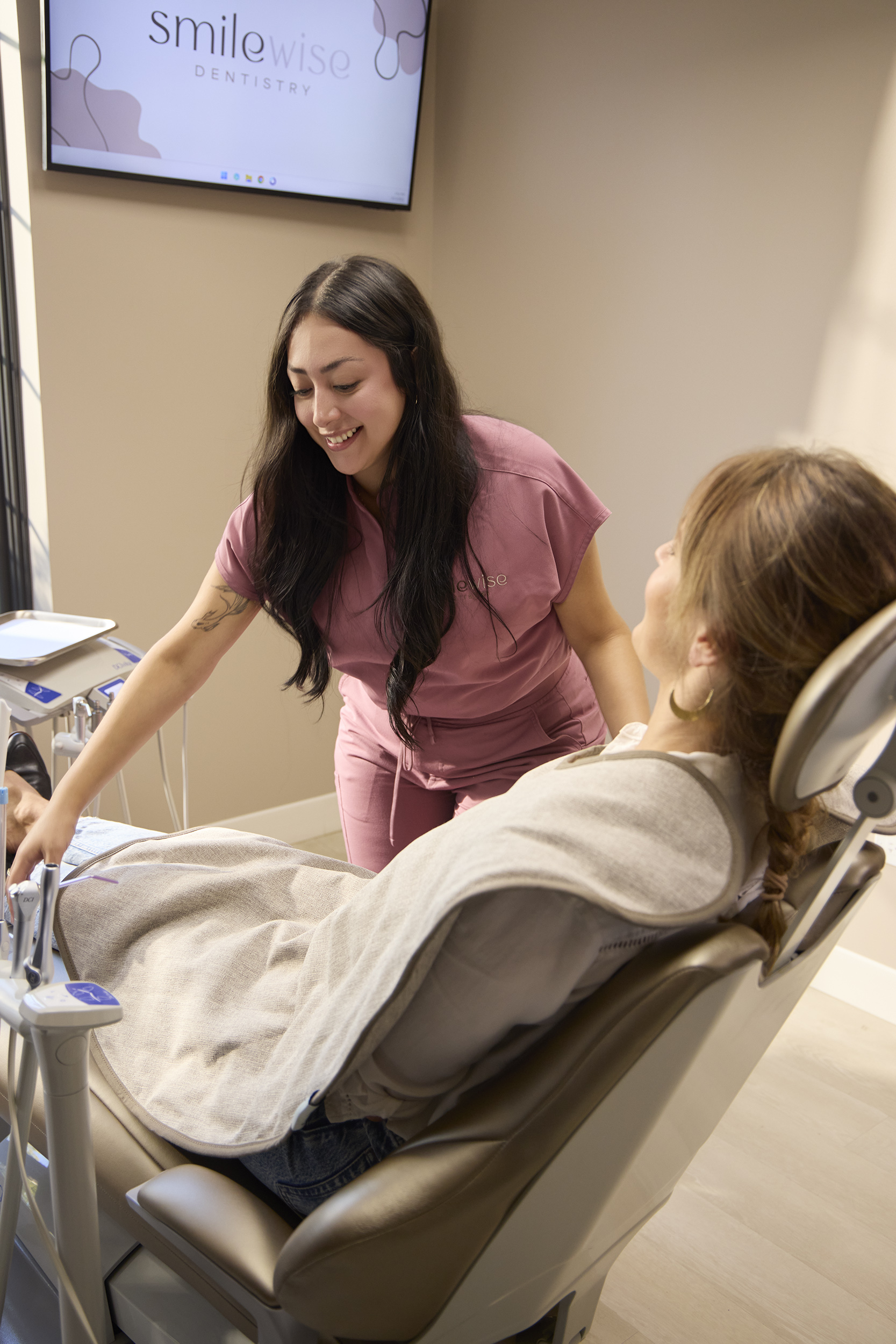
Dental Anxiety in Elmhurst: How SmileWise Makes Nervous Patients Feel Safe

Early Orthodontic Treatment in Elmhurst, IL: When Should Your Child Start?

Kids' Airway Screening in Elmhurst, IL — Catching Growth & Breathing Problems Early | SmileWise Dentistry
