

Early Orthodontic Treatment in Elmhurst, IL: When Should Your Child Start?
Most parents picture braces as a middle-school rite of passage. So it can come as a surprise when a dentist says, "Let's take a look at your five-year-old's bite." Is it too early? Is it just an upsell?
Usually, it's neither. Some of the most helpful orthodontic work happens while a child is still growing, and a simple evaluation now can mean a simpler plan later. At SmileWise Dentistry in Elmhurst, Dr. Reem Akel, DDS looks at a child's teeth, jaws, and breathing together, because they develop together. This guide is for parents in Elmhurst, Oak Brook, Villa Park, Lombard, Addison, and across DuPage County who want clear answers about early orthodontic treatment.
What Is Interceptive (Early) Orthodontics?
Interceptive orthodontics means guiding a child's jaw and tooth development while baby teeth and adult teeth are still coming in, typically somewhere between ages 4 and 7. The word "intercept" says it all: the goal is to catch a developing problem and steer it in a better direction before it becomes a bigger one.
It is not the same as comprehensive braces. Early treatment is usually shorter, targeted, and focused on a specific issue, such as a narrow upper jaw or a crossbite. Many children then take a break, let the remaining teeth come in, and are re-evaluated later to see whether any further treatment is needed.
Not every child needs early treatment. Many just need to be watched. The value of an early look is that you find out which group your child is in.
When Should a Child First Be Evaluated?
Ideally growth and development is being monitored for every child at every dental visit so we can catch issues early. The severity of issues and symptoms of each individual child should be assessed before treatment is recommended.
An evaluation in young children doesn't mean braces. It means:
- A baseline look at how the upper and lower jaws are growing
- A check for crowding, spacing, and bite problems while there's still room to guide them
- A review of habits such as thumb sucking, pacifier use, and mouth breathing
- A plan: treat now, monitor, or check back in six to twelve months
At SmileWise, this evaluation is woven into regular pediatric visits, so there's no separate, stressful appointment for your child.
Signs Your Child May Benefit From an Early Look
Some signs are easy to spot at home. Others only show up on an exam. Consider scheduling an evaluation if your child has:
- Crowded or crooked teeth that seem to have no room to come in, especially when the baby teeth are crowded
- A crossbite, where upper teeth sit inside the lower teeth when biting down
- An open bite, where front teeth don't meet
- An overbite or underbite that looks pronounced
- Late or early loss of baby teeth, or adult teeth coming in out of order
- Thumb sucking or pacifier use beyond the toddler years
- Mouth breathing, snoring, or restless sleep
- Jaw clicking, shifting when closing, or difficulty chewing
Dr. Akel pays particular attention to that last group of breathing-related signs, because they often connect to how the jaws are developing.
How Jaw Growth and Breathing Are Connected
This is where SmileWise looks different from a typical orthodontic conversation.
The upper jaw forms the floor of the nose and the roof of the mouth. When it's narrow, the space for the tongue can be limited, and the nasal airway can be smaller too. Children who breathe through their mouths for long periods, because of allergies, enlarged tonsils, or habit, may also develop different facial and jaw growth patterns over time.
That doesn't mean every crowded smile is an airway problem, and teeth alone never tell the whole story. But when a child has a narrow palate and also snores, grinds at night, or wakes up tired, it's worth looking at the bigger picture. Our guide to kids' airway screening in Elmhurst explains the signs and what a screening involves. If your child's symptoms point toward a medical cause such as enlarged tonsils or allergies, we'll recommend the right pediatrician or specialist.
The takeaway: straight teeth are a wonderful result, but at SmileWise the goal is a jaw and airway that develop well, with straight teeth as part of it.
Common Early Treatment Options
The right approach depends on your child's age, growth, and findings. Options Dr. Akel may discuss include:
- Palatal expansion. A gentle device that gradually widens a narrow upper jaw, creating room for adult teeth and often improving how the upper and lower jaws fit together. Expansion works best while the jaw is still growing, which is one reason timing matters.
- Space maintainers. Small appliances that hold space open when a baby tooth is lost early, so adult teeth don't drift and crowd.
- Limited aligner treatment. Used to correct a specific problem, such as a front tooth in the wrong position, or deep bites.
- Habit-correction support. Gentle strategies, sometimes with an appliance, to help a child outgrow thumb sucking or tongue thrusting.
- Myofunctional guidance. Exercises that support healthy tongue posture, lip seal, and nasal breathing, when appropriate.
Dr. Akel will explain which, if any, applies to your child and why. We'll confirm exactly which appliances and systems SmileWise provides at your consultation.
What Early Treatment Can and Can't Do
Honest expectations matter, so here they are.
Early treatment can:
- Create space for crowded adult teeth
- Correct a crossbite or guide jaw growth while it's still flexible
- Reduce the risk of injury to protruding front teeth
- Sometimes simplify, shorten, or prevent the need for later treatment
Early treatment can't:
- Guarantee that your child will never need braces or aligners as a teen
- Replace a full orthodontic plan when all adult teeth are in
- Work equally well at every age; timing is part of the plan
Some children do have a "Phase 1" now and a "Phase 2" later. Others only need monitoring. Both are perfectly normal paths.
What to Expect at a SmileWise Early Evaluation
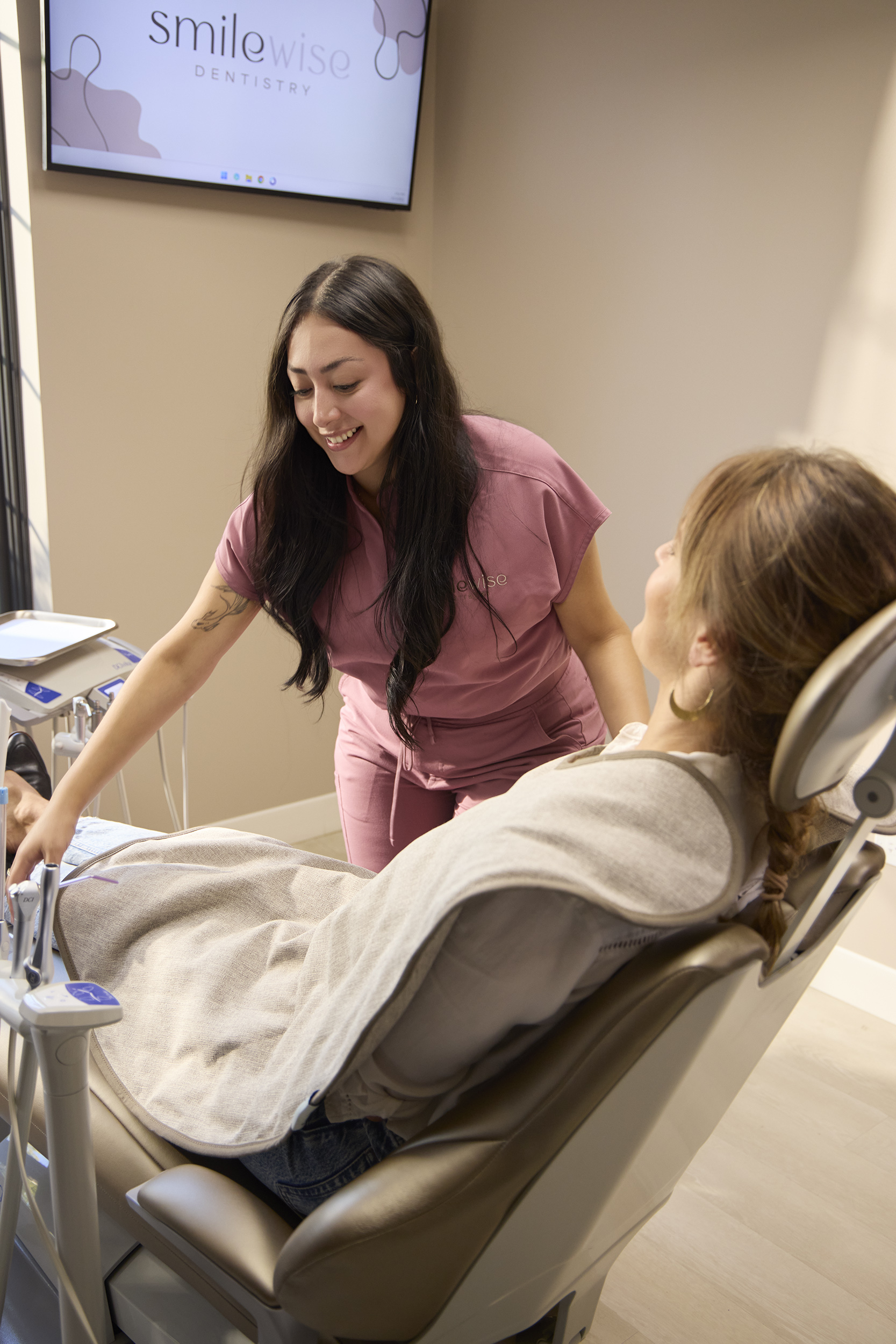
- A friendly start. Kids meet the team and the room first. Nervous children aren't rushed. See how we help with dental anxiety at SmileWise.
- A look at the whole picture. Dr. Akel reviews teeth, bite, jaw growth, tongue position, and breathing habits.
- Imaging if needed. X-rays are used only when they'll help the decision. Learn more in our guide to dental X-rays.
- Plain-language findings. We explain what we see, show you where possible, and outline options.
- A plan with no pressure. That might be treatment now, a monitoring schedule, or reassurance that everything is on track.
What About Older Kids and Teens?
If your child is past the early window, there's still plenty we can do. Older kids and teens may be candidates for clear aligners, and Dr. Akel is Invisalign certified and a member of the American Academy of Clear Aligners. Read more about Invisalign in Elmhurst.
Parents who had braces themselves often ask whether the same options exist for them. They do. Adult orthodontics is a common request at our practice.
Why Elmhurst Families Choose SmileWise
- One practice for the whole family. Your child's checkups, cleanings, and orthodontic monitoring are in one place.
- We connect teeth, jaws, and breathing. Airway-focused dentistry is our main differentiator.
- We explain, then recommend. You'll understand the reasoning before any decision.
- Credentialed care. Dr. Akel is a graduate of VCU School of Dentistry, Invisalign certified, Botox certified, and a member of the American Academy of Clear Aligners.
- Gentle, family-friendly visits. Because kids who feel safe become adults who keep their appointments.
Read more about Dr. Akel and our wellness approach to dentistry.
Frequently Asked Questions
Is early orthodontic treatment really necessary?
Not for every child. Many children only need monitoring, while others benefit from targeted early treatment such as palatal expansion for a narrow jaw or a crossbite. An evaluation shows which group your child falls into, so you can avoid both unnecessary treatment and missed opportunities.
Will my child still need braces after early treatment?
Possibly. Early treatment often simplifies or shortens later orthodontics, but it doesn't guarantee that braces or aligners won't be needed in the teen years. Adult teeth and growth continue changing. Many children have a short first phase, a rest period, and a re-evaluation later.
Can orthodontics help a child who mouth breathes or snores?
Sometimes, as part of a broader plan. A narrow upper jaw can limit space for the tongue and nasal airway, and expansion may help certain children. Snoring and mouth breathing can also have medical causes, such as allergies or enlarged tonsils, so we screen and refer when appropriate.
How do I know if my child's thumb sucking is a problem?
Thumb sucking is common in toddlers but always needs to be addressed. If it continues after adult teeth begin to appear, it can affect tooth position and the shape of the upper jaw. If your child is sucking a thumb or pacifier past age 1, ask us about gentle ways to help.
Does early orthodontic treatment hurt?
Most children report pressure or mild soreness for a few days after an appliance is placed or adjusted, then adapt quickly. The evaluation itself is painless. We explain each step to your child in simple terms so nothing is a surprise.
Not Sure Whether Your Child Needs an Early Look? Ask Us.
A short evaluation can give you clarity and peace of mind. Dr. Reem Akel and the SmileWise team will take the time to explain what's normal, what's worth watching, and what's worth acting on.
Schedule your child's visit today:
📍 623 W North Ave, Suite 1-2E, Elmhurst, IL 60126
📞 (630) 415-0800
We welcome families from Elmhurst, Oak Brook, Villa Park, Lombard, Addison, and throughout DuPage County.
This article is for educational purposes and isn't a substitute for personalized dental or medical advice.
Related Posts
Dental Anxiety in Elmhurst: How SmileWise Makes Nervous Patients Feel Safe
Early Orthodontic Treatment in Elmhurst, IL: When Should Your Child Start?

Kids' Airway Screening in Elmhurst, IL — Catching Growth & Breathing Problems Early | SmileWise Dentistry
