
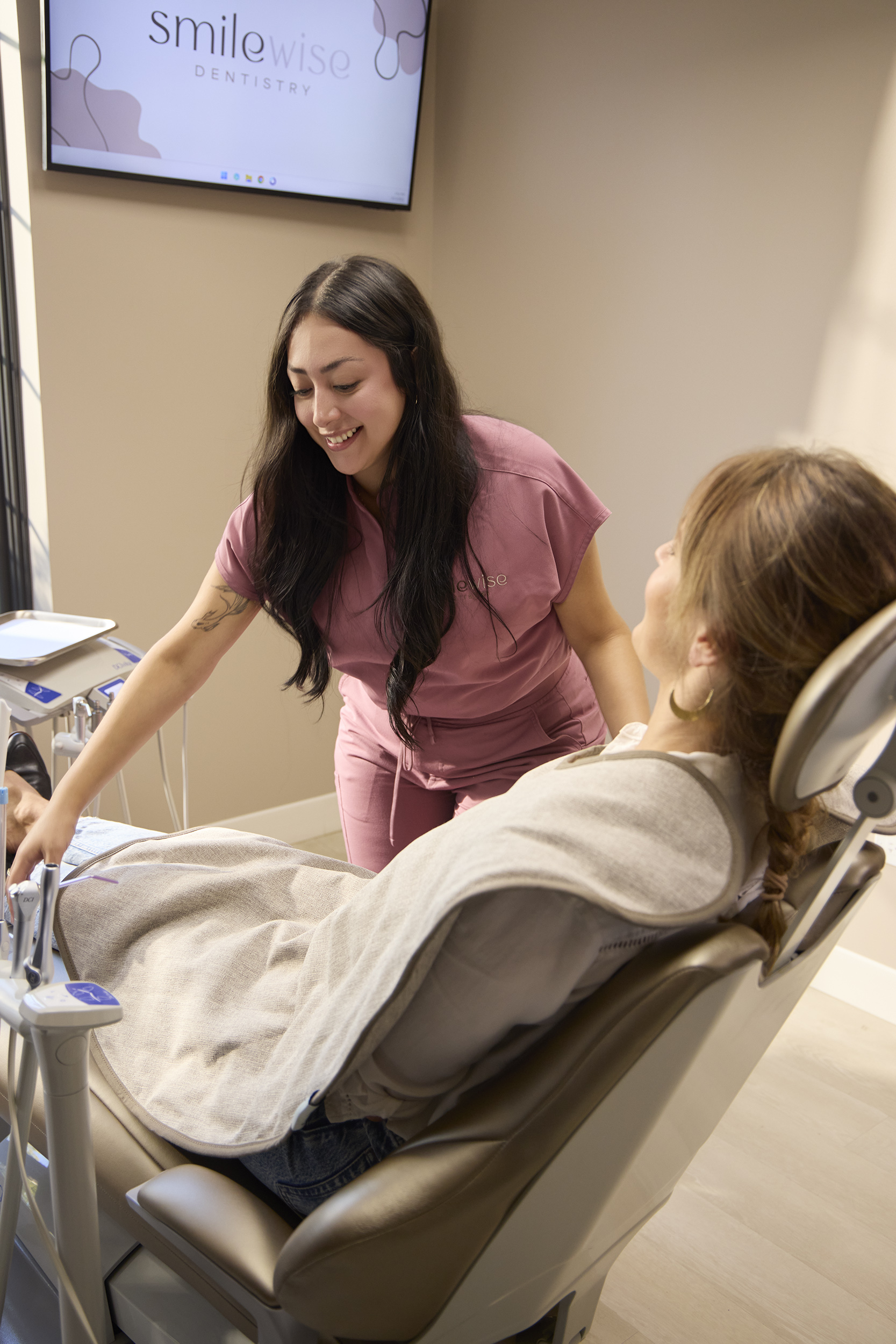
Dental Anxiety in Elmhurst: How SmileWise Makes Nervous Patients Feel Safe
If the thought of a dental appointment makes your stomach drop, you're not being dramatic, and you're not alone. Surveys consistently show that roughly 36% of Americans experience some degree of dental fear, and about 5–10% avoid the dentist entirely because of it. For many of those people, avoidance doesn't mean nothing is wrong — it usually means small problems have had years to become bigger ones.
At SmileWise Dentistry in Elmhurst, IL, Dr. Reem Akel, DDS built her practice around the idea that the biggest barrier to good dental health often isn't information or access — it's fear. This page explains where dental anxiety comes from, why it's more common than most people realize, and exactly how SmileWise is structured to help nervous patients throughout Elmhurst, Oak Brook, Villa Park, Lombard, Addison, and DuPage County finally feel safe in the chair.
Why Dental Anxiety Is So Common
Dental anxiety isn't a character flaw or an overreaction — it has real, well-understood roots.
Common causes include:
- A painful or frightening experience at a past dental visit, sometimes decades earlier
- Loss of control — lying back, unable to speak, someone working in a very sensitive part of your body
- Sensory triggers: the sound of a drill, the smell of a dental office, bright overhead lights
- Fear of pain, needles, or gagging
- Embarrassment about the condition of your teeth after avoiding care, which can create a cycle of shame and further avoidance
- General anxiety or past trauma that makes any loss of control feel unsafe
For a smaller group of patients, this crosses into true dental phobia — an intense, persistent fear that causes significant distress or panic. Whether it's mild nervousness or full-blown phobia, the response at SmileWise is the same: take it seriously, not personally, and build the visit around what actually helps.
Signs Dental Anxiety Might Be Affecting Your Care
Dental anxiety doesn't always look like obvious panic. It often shows up quietly, as patterns rather than a single moment of fear.
- Repeatedly canceling or rescheduling appointments
- Going years between checkups "because nothing hurts"
- Feeling your heart race or palms sweat just booking an appointment
- Difficulty sleeping the night before a visit
- Avoiding the dentist even when you know something is wrong
- Feeling embarrassed to go back after a long gap in care
If any of this sounds familiar, it's worth saying out loud to your dental team — not hiding. A practice that's actually equipped for anxious patients will change how the visit is run once they know.
How SmileWise Helps Anxious Patients Feel Safe
Dr. Akel's approach to dental anxiety isn't a single trick — it's a set of deliberate choices that run through every part of the visit.
1. A Real Conversation Before Any Treatment
Before anything happens in the chair, Dr. Akel talks with anxious patients about what specifically worries them — pain, control, a past bad experience — so the visit can be shaped around that, not a generic script.
2. A Stop-Anytime Signal
Every patient is told, explicitly, that they can raise a hand at any point and the team stops immediately, no questions asked. Just knowing that option exists measurably reduces anxiety for most patients, even if they never use it.
3. Clear, Step-by-Step Communication
Dr. Akel explains what she's about to do before she does it — no surprise instruments, no silence that lets your imagination fill in the blanks. Patients are told what a sound or sensation will feel like before it happens.
4. A Calm, Unhurried Office Environment
The SmileWise office at 623 W North Ave was designed to feel more like a wellness space than a clinical one — softer lighting, a quieter atmosphere, and appointments that aren't rushed to hit a volume quota.
5. Comfort Options
Depending on the procedure and patient, options like noise-canceling headphones, weighted blankets, and topical numbing before injections are available to reduce sensory and physical triggers.
6. Judgment-Free Care for Patients Returning After a Long Gap
Patients who haven't been to a dentist in years — sometimes a decade or more — are treated with the same respect as someone who never missed a cleaning. Dr. Akel's focus is on where you are now and what's next, not making you feel bad about the gap.
Why Avoiding the Dentist Makes Things Harder, Not Easier
It's a natural instinct to avoid what scares you, but with dental health, avoidance tends to backfire in a specific way: problems that would have been simple and painless to treat early — a small cavity, early gum disease — become bigger, more expensive, and more uncomfortable to treat the longer they're left alone.
This creates a difficult cycle: fear leads to avoidance, avoidance leads to a bigger problem, and a bigger problem makes the eventual visit feel even more intimidating. The way out of that cycle isn't willpower — it's finding a dental team that treats anxiety as a real, manageable part of care rather than an inconvenience.
Regular checkups (see our piece on how often you should really see the dentist) also mean smaller, less invasive visits overall, which is often easier for anxious patients than a single high-stakes appointment to address years of deferred care.
What to Expect at Your First Visit If You're Nervous
If dental anxiety has kept you away, here's what a first visit at SmileWise typically looks like:
- A conversation first — before any exam, Dr. Akel asks about your history and specific concerns
- No judgment about how long it's been since your last visit
- A clear explanation of what the exam will involve, step by step
- Permission to pause or stop at any point
- A treatment plan that's discussed with you, not decided for you, with time to ask questions before agreeing to anything
The goal of that first visit isn't to fix everything at once — it's to prove that the visit is safe, so the next one feels less daunting than this one did.
The SmileWise Difference
SmileWise Dentistry is led by Dr. Reem Akel, DDS — a graduate of VCU School of Dentistry, Invisalign-certified provider, Botox-certified clinician, and member of the American Academy of Clear Aligners — who built her practice around a wellness-oriented, whole-patient philosophy that treats the person, not just the procedure.
What that means for anxious patients specifically:
- Anxiety is discussed openly at the start of a visit, not discovered mid-procedure
- A stop-anytime signal that's offered proactively, not just available if asked
- An unhurried schedule that leaves room for explanation and reassurance
- A calm, non-clinical office environment at 623 W North Ave, Suite 1-2E
- Zero judgment for patients returning after a long gap in care
Frequently Asked Questions About Dental Anxiety
Is dental anxiety actually common, or am I overreacting?
It's extremely common — surveys suggest roughly 36% of Americans experience some degree of dental fear, and 5–10% avoid dental care entirely because of it. You are not overreacting, and a well-prepared dental team will take that seriously rather than dismissing it.
Will I be judged if it's been years since my last dental visit?
No. Dr. Akel's focus is on where your dental health stands now and what to do next, not making you feel guilty about a gap in care. Many patients return after years away, and the first visit is built around comfort and honesty, not lectures.
What can I do if I get anxious just thinking about booking an appointment?
Call and mention your anxiety upfront — SmileWise can adjust scheduling, appointment length, and communication style before you even walk in. Simply naming the fear out loud to the team, rather than hiding it, is often the biggest step toward making the visit manageable.
Ready to Break the Cycle of Dental Avoidance?
If dental anxiety has kept you from getting care you know you need, you don't have to white-knuckle your way through it — and you don't have to explain or justify the fear. Tell us about it, and we'll build the visit around it.
We see patients from Elmhurst, Oak Brook, Villa Park, Lombard, Addison, and throughout DuPage County.
Book a visit designed around your comfort:
🌐 smilewise-dentistry.com/contact
📍 623 W North Ave, Suite 1-2E, Elmhurst, IL 60126
📞 (630) 415-0800
Related Posts
Dental Anxiety in Elmhurst: How SmileWise Makes Nervous Patients Feel Safe
Early Orthodontic Treatment in Elmhurst, IL: When Should Your Child Start?

Kids' Airway Screening in Elmhurst, IL — Catching Growth & Breathing Problems Early | SmileWise Dentistry
