
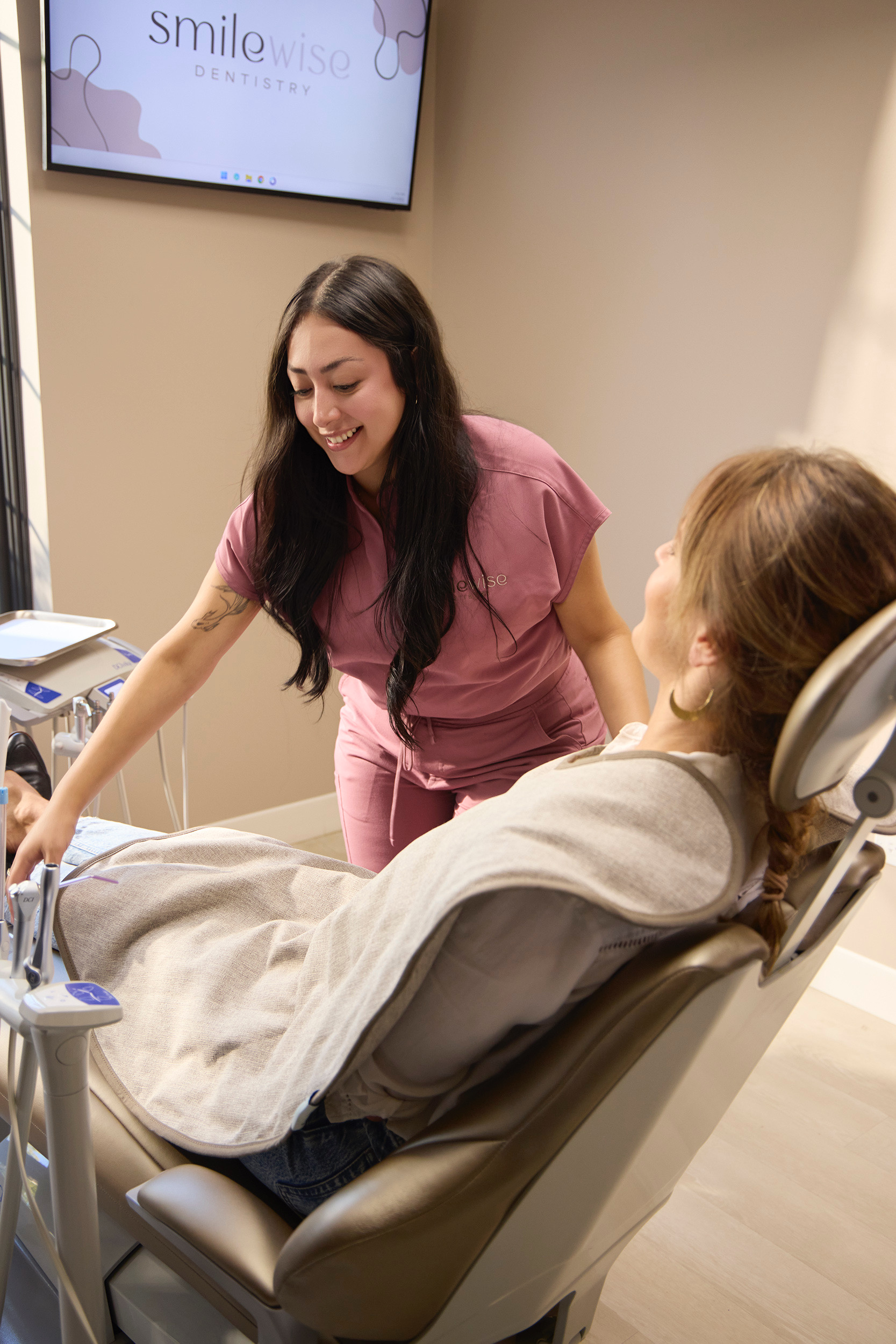
What Actually Happens at a Dental Cleaning — and Why It Matters More Than You Think
What Actually Happens at a Dental Cleaning — and Why It Matters More Than You Think
Most people know they're supposed to get a dental cleaning twice a year. Far fewer people know what actually happens during those 45 minutes — or why it matters so much more than a quick polish and a goodie bag.
At SmileWise Dentistry in Elmhurst, IL, we believe an informed patient is an empowered patient. So let's walk through exactly what a professional dental cleaning involves, what we're looking for at each step, and why skipping or delaying this appointment has consequences that go well beyond your teeth.
It Starts Before We Touch Your Teeth
A professional cleaning at SmileWise isn't just a hygiene appointment — it's a health assessment. Before any instruments come out, your hygienist reviews your medical history and notes any changes since your last visit. This matters more than most people realize.
Medications you've started taking, hormonal changes, new health diagnoses, stress levels — all of these have a direct relationship to your oral health. For example, dozens of common medications cause dry mouth, which dramatically increases cavity risk. Pregnancy changes gum tissue sensitivity. Certain blood pressure medications can cause gum overgrowth. This conversation isn't small talk; it shapes how we approach your entire appointment.
We also take a few minutes to look at your soft tissue — your lips, cheeks, tongue, throat, and the floor of your mouth. This is an oral cancer screening, and it happens at every single visit. Oral cancer is highly treatable when caught early, and a routine cleaning is one of the best opportunities for early detection.
Patients from Elmhurst, Oak Brook, Lombard, and surrounding DuPage County communities often tell us they've never had this explained to them at a previous practice. At SmileWise, we make sure you understand what we're doing and why.
Step by Step: What a Professional Cleaning Actually Involves
Periodontal Charting and Gum Assessment
Before the cleaning begins, Dr. Akel or your hygienist measures the depth of the pockets between your teeth and gums using a small probe. These measurements — recorded as numbers like "2, 3, 2" — tell us whether your gum tissue is healthy or showing early signs of disease.
Healthy pockets measure 1–3 millimeters. Anything deeper can indicate the beginning of gum disease, which is the leading cause of tooth loss in adults. Catching a 4mm reading early is the difference between a simple intervention and a much more involved treatment down the road.
This step is one of the most important things that happens at your cleaning — and it's one most patients don't even notice is occurring. This helps us determine what type of cleaning is most appropriate for you and if a deeper cleaning (scaling and root planning) is needed.
Scaling: Removing What Brushing Can't
Here's the honest truth: no matter how diligently you brush and floss, there are areas of your mouth that your toothbrush simply cannot reach. Plaque — the soft, sticky film of bacteria that forms on teeth every day — hardens into tartar (also called calculus) within 24 to 72 hours. Once it hardens, it can only be removed by a dental professional.
Dr. Akel or hygienist uses instruments called scalers to carefully remove tartar from the surfaces of your teeth and just below the gumline. This process is called scaling, and it's the core of what a "cleaning" actually means. Without it, tartar builds up, irritates gum tissue, and creates the conditions for gum disease to take hold.
At SmileWise, we use both hand scalers and ultrasonic scalers depending on what your teeth need. Ultrasonic scalers use gentle vibrations and a water stream to break up deposits — many patients find them more comfortable than traditional hand scaling, especially around sensitive areas.
Polishing
Once tartar is removed, we polish your teeth using a slightly gritty paste and a rotating rubber cup. This removes surface stains from coffee, tea, wine, and food, and leaves your teeth feeling smooth and clean.
It's worth noting that polishing is the cosmetic part of your cleaning — it makes your teeth look and feel great, but the real protective work happened during scaling. Some patients wonder if they can skip it; we recommend keeping it as part of your routine because the smooth surface makes it harder for new plaque to adhere.
Flossing
Professional flossing during your cleaning isn't redundant with what you do at home — it reaches areas between teeth that are difficult to access on your own, removes any remaining debris from polishing, and lets us check the contact points between teeth for signs of decay forming between them.
Fluoride Or Hydroxyapatite Treatment
Depending on your individual cavity risk, your hygienist may apply a fluoride or hydroxyapatite varnish at the end of your visit. These varnishes strengthen enamel, making teeth more resistant to the acid produced by bacteria. It's especially beneficial for patients with a history of cavities, dry mouth, or exposed root surfaces.
At SmileWise, we also offer Curodont remineralization treatment for patients with early-stage cavities or weakened enamel — a non-invasive alternative to fillings that uses biomimetic technology to actually repair enamel before a cavity fully forms. Ask us about it at your next visit.
The Exam: What the Dentist Is Looking For
With every new patient or hygiene visit Dr. Reem Akel performs a comprehensive exam. This goes well beyond checking for cavities.
Dr. Akel evaluates:
- Cavities — using visual examination and, when appropriate, X-rays to catch decay between teeth or beneath existing restorations before it becomes a larger problem
- Existing restorations — checking that older fillings, crowns, or other dental work are still intact and functioning
- Bite and jaw alignment — looking for signs of grinding, clenching, or bite problems that can cause tooth wear and jaw pain over time
- Gum health — reviewing the periodontal charting from your hygienist and discussing any areas of concern
- Airway indicators — because SmileWise is an airway-focused practice, Dr. Akel also evaluates the size and position of your tongue, your tonsils and soft palate, and your jaw structure for signs that might indicate sleep-disordered breathing or airway restriction
That last point is something you won't find at most dental offices in the Elmhurst area. Airway assessment is built into every comprehensive exam at SmileWise — because the mouth is the gateway to the airway, and a dentist is uniquely positioned to spot the signs that something may be affecting your sleep and overall health.
X-Rays: When Do You Actually Need Them?
Not every appointment requires X-rays, and at SmileWise we take a thoughtful, individualized approach to imaging. New patients typically receive a full set of X-rays to establish a baseline. For established patients, we generally recommend bitewing X-rays (which show the areas between teeth) once a year, and a panoramic or full-mouth series every few years.
X-rays allow us to see:
- Decay forming between teeth before it's visible to the naked eye
- Bone loss around the roots of teeth (an indicator of gum disease)
- The status of wisdom teeth and any impacted teeth
- Cysts, tumors, or other abnormalities in the jaw
We use digital X-rays at SmileWise, which emit significantly less radiation than traditional film X-rays and give us a clearer, more detailed image immediately.
Why Twice a Year — and When That's Not Enough
The standard recommendation of two cleanings per year is a guideline, not a universal rule. It's right for many patients, but some people genuinely benefit from more frequent care.
You may need cleanings every 3–4 months if you:
- Have a history of gum disease or are in active periodontal treatment
- Are pregnant (pregnancy significantly increases gum disease risk)
- Have diabetes, which affects gum tissue health and healing
- Have a history of heavy tartar buildup
- Smoke or have a dry mouth condition
- Are undergoing chemotherapy or radiation
On the other hand, patients with excellent home care, low cavity risk, and consistently healthy gum measurements may do fine with one cleaning per year — though we'll always assess this individually.
Many patients from Elmhurst, Villa Park, Addison, and nearby communities come to SmileWise after feeling like their previous dentist put them on a schedule that didn't match their actual needs. We tailor your recall interval to your specific risk profile, not a one-size-fits-all calendar.
What Happens If You Skip It
A dental cleaning isn't just a nice-to-have. It's preventive maintenance with real consequences when skipped.
When tartar is left on teeth long-term, the bacteria living in it produce toxins that cause chronic inflammation in gum tissue. This leads to gum disease — first gingivitis (reversible), then periodontitis (irreversible bone loss around teeth). Gum disease is the #1 cause of tooth loss in adults, and it's largely preventable with consistent professional care.
There's also a well-established connection between gum disease and systemic health. Chronic oral inflammation is linked to increased risk of heart disease, diabetes complications, preterm birth, and cognitive decline. Skipping cleanings isn't just a dental decision — it has whole-body implications.
Beyond gum disease, delayed care means cavities that could have been caught small become cavities that require crowns — or extractions. The cost, in time and money, of neglected dental care is almost always greater than the cost of prevention.
Frequently Asked Questions About Dental Cleanings
How long does a dental cleaning take?A standard adult cleaning appointment at SmileWise typically takes 60 to 75 minutes, including the hygiene visit and exam with Dr. Akel. If it's been longer than a year since your last cleaning, or if you have significant tartar buildup, your first appointment may take a bit longer. We always schedule enough time to be thorough — not rushed.
Does a dental cleaning hurt?For most patients with healthy gums, a cleaning is comfortable and painless. If you have sensitive gums or gum disease, you may feel some pressure or mild discomfort during scaling, especially near the gumline. We offer options to help with sensitivity, including topical anesthetic for areas that need it. If you've been avoiding the dentist because of anxiety, let us know — creating a calm, comfortable experience is something we take seriously at SmileWise.
How is a professional cleaning different from brushing at home?Brushing and flossing remove soft plaque — the sticky film that forms on teeth every day. But once plaque hardens into tartar (which can happen in as little as 24–72 hours), it cannot be removed by brushing alone. Professional scaling removes tartar from all surfaces of the teeth, including below the gumline where your toothbrush cannot reach. No amount of at-home brushing can replicate this.
Will my insurance cover a dental cleaning?Most dental insurance plans cover two preventive cleanings per year at little or no cost to you, as preventive care is considered foundational. If you require more frequent cleanings due to gum disease, insurance may cover periodontal maintenance visits as well, though coverage varies. If you don't have insurance, ask us about our in-house membership plan at SmileWise — it's designed to make regular care affordable for uninsured patients in the Elmhurst area.
What's the difference between a regular cleaning and a deep cleaning?A regular cleaning (prophylaxis) is for patients with healthy gums or mild gingivitis. It focuses on removing tartar from tooth surfaces above and just slightly below the gumline. A deep cleaning (scaling and root planing) is a more involved treatment for patients with active gum disease — it removes tartar from deeper pockets and smooths the root surfaces to help gum tissue reattach. Dr. Akel will always explain what you need and why before recommending any treatment beyond a standard cleaning.
Ready to Schedule Your Cleaning in Elmhurst?
Whether it's been 6 months or 6 years since your last dental visit, you'll be met with zero judgment and a lot of genuine care at SmileWise.
We welcome patients from Elmhurst, Oak Brook, Villa Park, Lombard, Addison, and all across DuPage County. New patients are always welcome, and we offer flexible scheduling to work around busy lives.
SmileWise Dentistry
623 W North Ave, Suite 1-2E
Elmhurst, IL 60126
📞 (630) 415-0800
🌐 smilewise-dentistry.com/contact
Dr. Reem Akel, DDS, is a graduate of VCU School of Dentistry, Invisalign certified, Botox certified, and a member of the American Academy of Clear Aligners. She practices comprehensive, wellness-focused dentistry — which means your cleaning appointment is about a lot more than clean teeth.
Related Posts
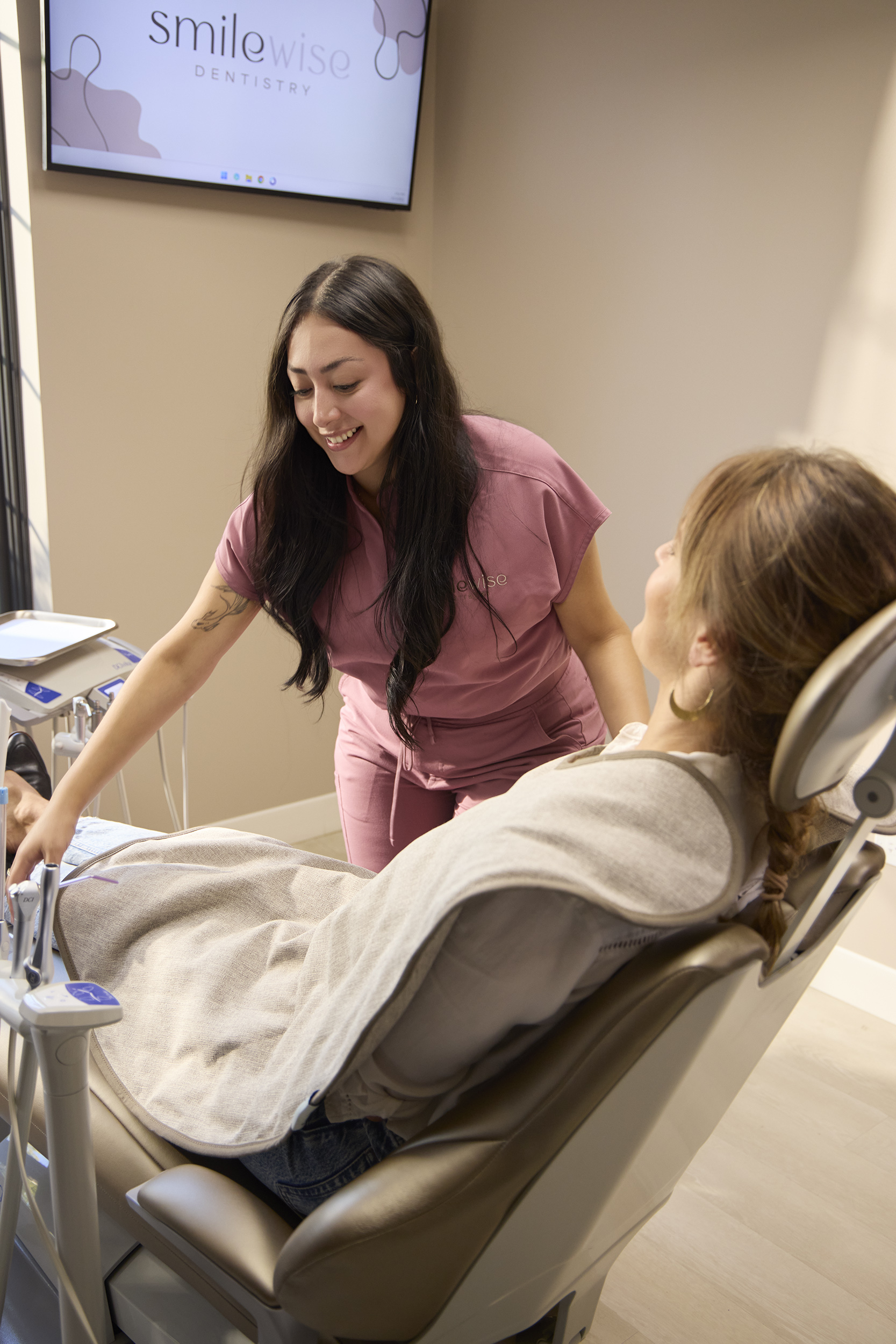
Dental Anxiety in Elmhurst: How SmileWise Makes Nervous Patients Feel Safe

Early Orthodontic Treatment in Elmhurst, IL: When Should Your Child Start?

Kids' Airway Screening in Elmhurst, IL — Catching Growth & Breathing Problems Early | SmileWise Dentistry
