
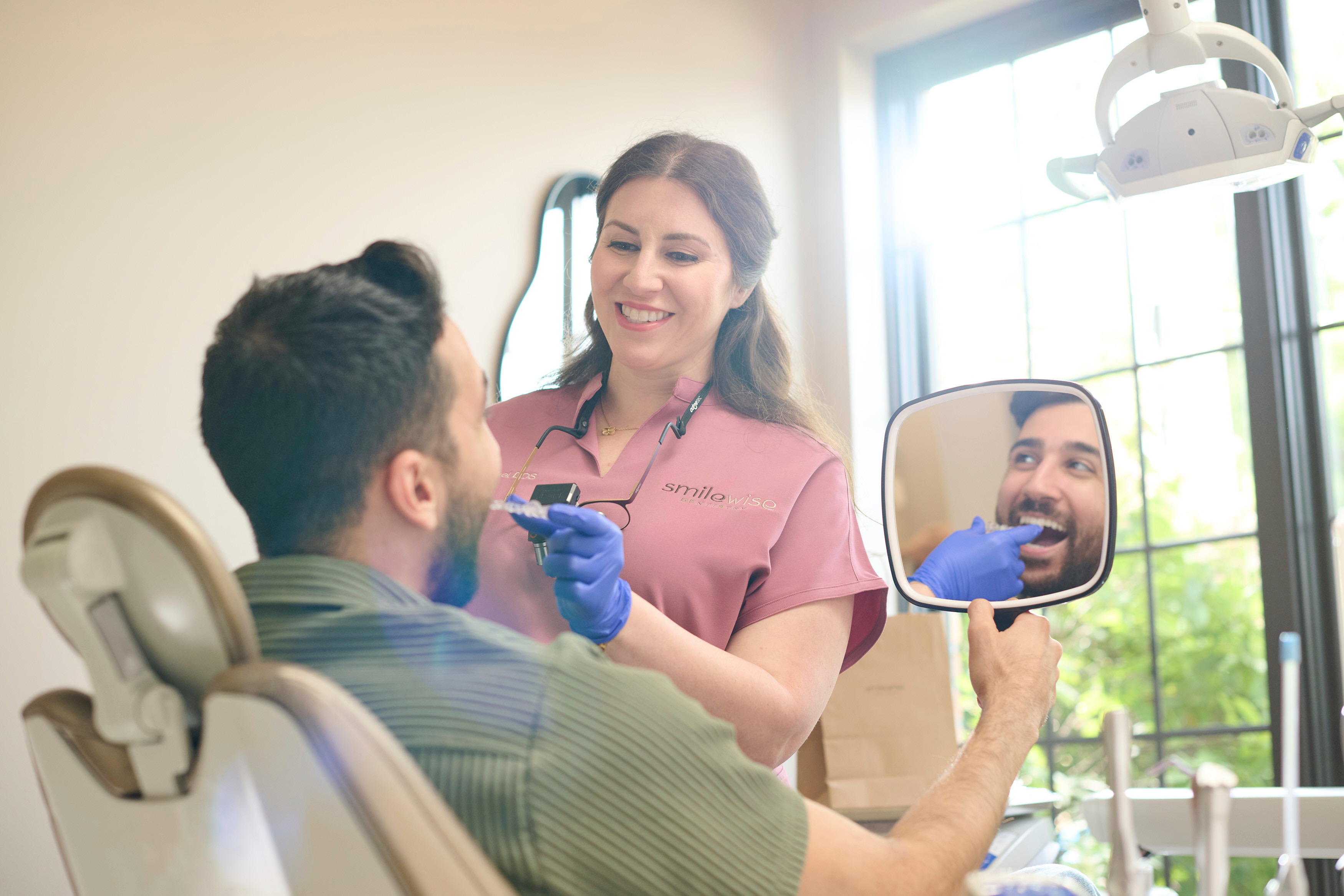
Invisalign in Elmhurst IL — What Most Practices Don't Explain
Invisalign in Elmhurst, IL — What Most Practices Don't Explain
If you've been thinking about Invisalign, you've probably already done some research. You know it's clear. You know it's removable. You've seen the before-and-after photos.
But here's what most Invisalign providers in the Elmhurst area don't walk you through: what it actually means to be a good candidate, what the process really involves, and how the best results go beyond just straight teeth.
At SmileWise Dentistry, Dr. Reem Akel approaches Invisalign differently — because she approaches dentistry differently. Before recommending any orthodontic treatment, she looks at your bite, your jaw function, your airway, and your long-term oral health. Straight teeth are the outcome, but wellness is the goal.
This page covers everything you should know before starting Invisalign in Elmhurst, IL — including the things most practices skip.
What Is Invisalign, Really?
Invisalign is a system of custom-made clear plastic aligners that gradually shift your teeth into a new position. You wear each set of aligners for about one to two weeks, then move to the next set. Over time — typically 6 to 18 months for most adult cases — your teeth move into alignment.
Unlike traditional metal braces, Invisalign aligners are:
- Removable — you take them out to eat, drink, and brush
- Nearly invisible — clear plastic that most people won't notice
- More comfortable — no brackets or wires to irritate your cheeks
- Flexible — you can attend a wedding or a big presentation without anyone knowing you're in treatment
But here's what the marketing materials often leave out: Invisalign is a medical treatment, not just a cosmetic upgrade. And like any medical treatment, the provider matters as much as the product.
Why the Provider Matters More Than You Think
Invisalign is a licensed system, which means any licensed dentist can offer it. That's good — it's widely accessible. But "offering Invisalign" and delivering excellent Invisalign outcomes are two different things.
Dr. Reem Akel is an Invisalign-certified provider who takes a whole-health approach to orthodontic treatment. That means before designing your treatment plan, she evaluates:
- Your bite (occlusion) — how your upper and lower teeth meet when you close your mouth. Moving teeth without addressing bite can cause new problems down the road, including jaw pain and wear patterns.
- Your jaw joints (TMJ) — if you grind your teeth, clench, or have jaw discomfort, this needs to be part of the conversation before orthodontic treatment begins.
- Your airway — this is where SmileWise stands apart. Tooth position and jaw development affect your airway more than most people realize. Invisalign done right can actually support better breathing. Invisalign done in isolation can, in some cases, make airway issues worse if not properly accounted for.
- Your gum health — moving teeth through unhealthy gum tissue is not a good idea. A healthy foundation is essential before orthodontic treatment.
This comprehensive evaluation isn't a sales pitch. It's what good clinical care looks like.
Who Is a Good Invisalign Candidate?
Most adults with mild to moderate alignment concerns are excellent candidates for Invisalign. This includes:
- Crowding — teeth that overlap or are rotated due to limited jaw space
- Spacing — gaps between teeth that affect appearance or function
- Overbite or underbite — upper or lower teeth that extend too far forward or backward
- Crossbite — when upper and lower teeth don't align properly side to side
- Open bite — when upper and lower teeth don't touch when the mouth is closed
Invisalign has also become a strong option for teens, with special features like compliance indicators and replacement aligners built into teen treatment plans.
It's worth knowing that Invisalign is not always the right choice. Severe bite discrepancies, significant bone issues, or certain jaw problems may require a different approach — or a combination of treatments. At SmileWise, Dr. Akel will tell you honestly whether Invisalign is the best fit for your situation or whether another path makes more sense.
What the Invisalign Process Looks Like at SmileWise
Here's a realistic picture of what to expect, from your first consultation to your final aligner:
1. Consultation and Records
Your first step is a comprehensive evaluation. Dr. Akel will examine your teeth, gums, bite, and jaw, take digital impressions (no goopy trays), and review any X-rays needed. She'll also do an airway screening — something you won't find at most Invisalign providers in the Elmhurst area.
2. Treatment Planning
Using Invisalign's ClinCheck technology, Dr. Akel designs your tooth movement virtually, step by step. You can actually see a 3D simulation of what your smile will look like at the end of treatment. This is also where the number of aligners and the expected treatment timeline are determined.
3. Aligner Fabrication
Once your plan is approved, your custom aligners are manufactured and sent to the office. This typically takes two to three weeks.
4. Attachments and Fittings
Some teeth need small tooth-colored "attachments" — tiny dots of composite bonding that give the aligners leverage to move teeth more precisely. These are very discreet and temporary. Dr. Akel will fit your first set of aligners, walk you through how to insert and remove them, and answer every question you have.
5. Progress Appointments
You'll come in every 6 to 8 weeks so Dr. Akel can monitor your progress, make any refinements, and ensure everything is tracking correctly. These visits also keep your overall oral health in check throughout treatment.
6. Retention
This is the step most people don't hear enough about: retention is forever. After your last aligner, you'll wear retainers — typically at night — to keep your teeth in their new position. Skipping this step is why so many people's teeth shift back after orthodontic treatment. Dr. Akel makes sure every SmileWise patient understands their retainer plan before treatment even begins.
Invisalign vs. Braces: An Honest Comparison
Patients who come to SmileWise from Oak Brook, Villa Park, Lombard, Addison, and across DuPage County often ask which is better — Invisalign or traditional braces. The honest answer is: it depends on your case.
Invisalign Traditional Braces
Visibility: Nearly invisible Visible metal brackets
Removability: Yes — for eating No
and cleaning
Comfort: Smooth plastic Brackets and wires can irritate
Best for: Mild to moderate cases, Complex cases, patients who
lifestyle-conscious patients prefer a set-and-forget approach
Compliance required: High — Built in
must wear 20–22 hrs/day
Cleaning: Easier — brush normally Requires more care around brackets
For most adults and many teens, Invisalign is an excellent choice. For patients with more complex bite issues, Dr. Akel may recommend traditional braces or a hybrid approach.
The SmileWise Difference for Invisalign Patients
SmileWise Dentistry isn't a chain or a pop-up Invisalign kiosk. Dr. Reem Akel, DDS, is a general and cosmetic dentist who trained at VCU School of Dentistry and a member of the American Academy of Clear Aligners brings a whole-health philosophy to every patient relationship. She doesn't hand off your care to an assistant after the first appointment — she's the one designing your treatment, seeing you at your progress visits, and monitoring your outcome start to finish.
What that means for you as an Invisalign patient in Elmhurst:
- A comprehensive evaluation that goes beyond just your teeth
- Honest candidacy assessment — no one gets oversold on treatment they don't need
- Airway-aware treatment planning, which is rare in general dental practices
- Personal, continuity-of-care relationships with your provider
- A modern, comfortable office at 623 W North Ave, Suite 1-2E, right in the heart of Elmhurst
Frequently Asked Questions About Invisalign in Elmhurst
Does Invisalign hurt?Most patients experience mild pressure or soreness when they switch to a new set of aligners — this is normal and means the treatment is working. It typically fades within a day or two. Invisalign is generally more comfortable than traditional braces because there are no brackets or wires to irritate your cheeks and gums. Over-the-counter pain relievers like ibuprofen can help with any initial discomfort during the first few days of treatment.
How long does Invisalign take?Treatment length depends entirely on the complexity of your case. Mild alignment issues can sometimes be corrected in as few as 6 months. More involved cases typically run 12 to 18 months. At SmileWise, Dr. Akel gives you a realistic timeline during your consultation — based on your actual teeth, not a marketing average. She'll also walk you through the 3D simulation so you can see the projected outcome before committing.
Is Invisalign covered by insurance?Many dental insurance plans that include orthodontic coverage will apply that benefit to Invisalign. Coverage varies widely by plan, so SmileWise's team will verify your benefits before you start and walk you through your out-of-pocket estimate. Flexible payment plans are also available to make treatment accessible. Don't let cost assumptions stop you from getting a consultation — the actual numbers often surprise people.
What happens if I lose or break an aligner?It happens — don't panic. Contact SmileWise as soon as possible. Depending on where you are in your treatment, Dr. Akel may advise you to wear your previous set of aligners, move ahead to the next set, or order a replacement. Most Invisalign teen plans include a set of replacement aligners. Adult patients can order replacements if needed. The most important thing is not to go without aligners for an extended period, as teeth can shift back quickly.
Can I eat whatever I want with Invisalign?Yes — because you remove your aligners to eat, there are no food restrictions with Invisalign. You can eat normally, brush your teeth, and put your aligners back in. This is one of the biggest lifestyle advantages over traditional braces. The one requirement: always remove aligners before eating or drinking anything other than plain water, and clean your teeth before reinserting them to avoid trapping food and bacteria against your teeth.
Why does airway matter for Invisalign?This is a question Dr. Akel loves to answer. Your jaw position and tooth alignment directly affect the dimensions of your airway. In some patients — especially those with crowded teeth or a narrow dental arch — orthodontic treatment can actually create more room for the tongue and improve breathing. In others, certain tooth movements could potentially affect jaw posture in ways that impact airway. By evaluating the airway first, SmileWise ensures that your Invisalign treatment supports your whole-body health, not just your smile.
Ready to Start Invisalign in Elmhurst?
If you've been considering Invisalign, the best first step is a conversation — not a commitment. At SmileWise Dentistry, we offer comprehensive Invisalign consultations where Dr. Akel will evaluate your teeth, explain exactly what treatment would involve for your specific case, and give you a clear picture of costs, timeline, and what to expect.
We see patients from Elmhurst, Oak Brook, Villa Park, Lombard, Addison, and throughout DuPage County.
Book your Invisalign consultation today:
🌐 smilewise-dentistry.com/contact
📍 623 W North Ave, Suite 1-2E, Elmhurst, IL 60126
📞 (630) 415-0800
Related Posts
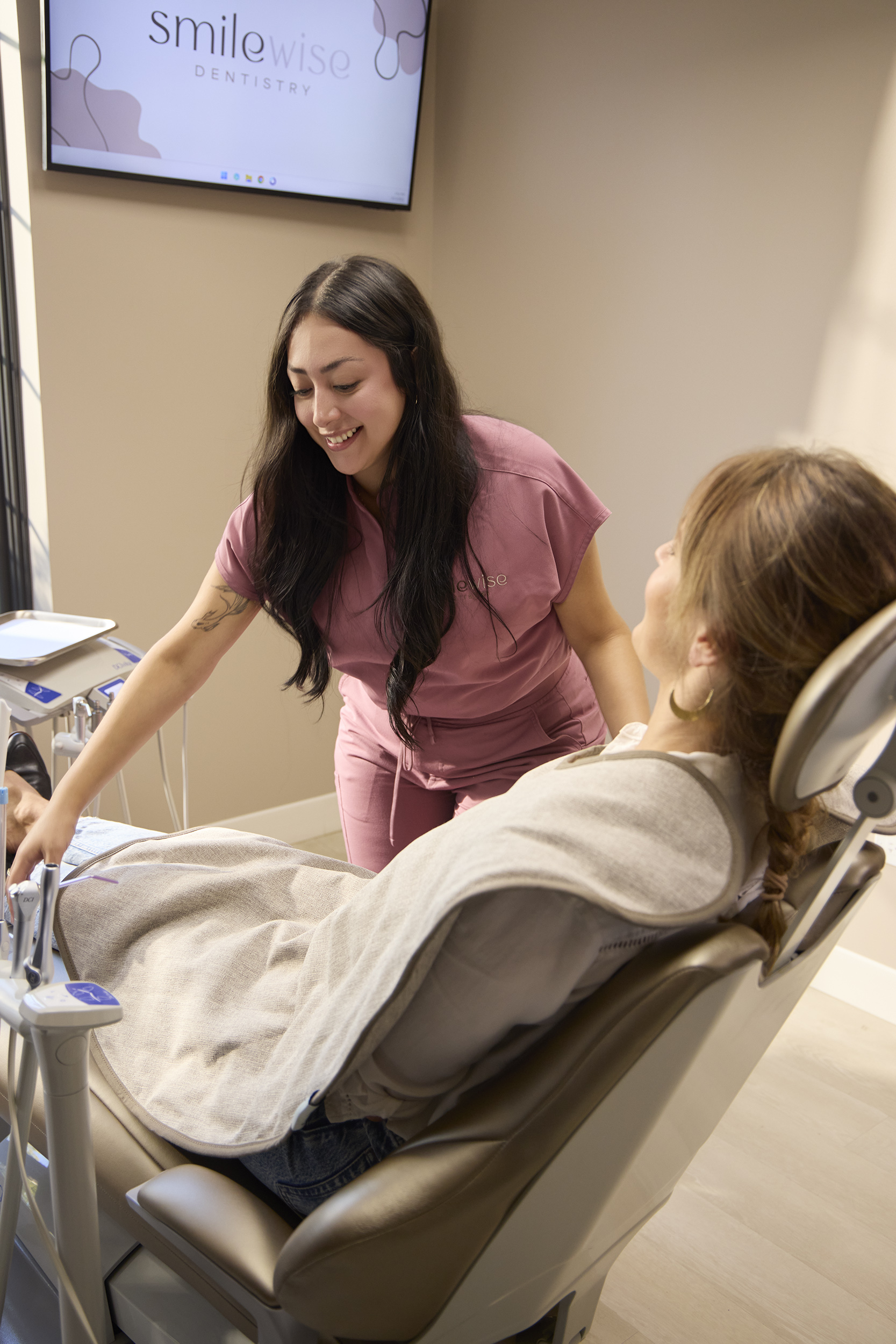
Dental Anxiety in Elmhurst: How SmileWise Makes Nervous Patients Feel Safe

Early Orthodontic Treatment in Elmhurst, IL: When Should Your Child Start?

Kids' Airway Screening in Elmhurst, IL — Catching Growth & Breathing Problems Early | SmileWise Dentistry
