

Women's Oral Health — How Your Hormones Affect Your Teeth
If you've ever noticed your gums bleed more before your period, felt unusually sensitive teeth during pregnancy, or developed dry mouth after starting a new medication, you're not imagining it — and it's not "just" your teeth being sensitive. Your mouth responds directly to hormonal changes, and most dental visits never mention this connection at all.
At SmileWise Dentistry in Elmhurst, IL, Dr. Reem Akel, DDS treats women's oral health as its own category of care, not an afterthought folded into a routine cleaning. That means asking about your cycle, pregnancy status, medications, and life stage as part of understanding what's happening in your mouth — because a 35-year-old on hormonal birth control, a pregnant patient in her second trimester, and a woman navigating menopause all need different things from their dentist, even if their teeth look similar on an X-ray. This page walks through how hormones affect your dental health across every life stage, and why women in Elmhurst, Oak Brook, Villa Park, Lombard, Addison, and DuPage County are increasingly seeking out a dentist who actually understands this connection.
Why Hormones Matter to Your Dental Health
Estrogen and progesterone receptors exist throughout your gum tissue, which means hormonal fluctuations directly change how your gums respond to plaque and bacteria — often making them more inflamed and more sensitive even when your oral hygiene hasn't changed at all. This isn't a minor footnote; it's a well-documented mechanism that explains why women experience distinct dental patterns across puberty, the monthly cycle, pregnancy, and menopause.
What hormonal fluctuation can affect in your mouth:
- Gum sensitivity and bleeding, independent of plaque levels
- Blood flow to gum tissue, which changes inflammation response
- Saliva production and composition, affecting your natural defense against cavities
- Bone density in the jaw, which matters for tooth stability and implant candidacy
- How your body responds to the same bacteria it's always been exposed to
Most general dentists check for plaque and decay but don't connect the dots to what's driving increased sensitivity or inflammation in the first place. At SmileWise, that connection is part of the exam, not an extra conversation you have to initiate yourself.
Puberty and the Monthly Cycle
Rising hormone levels during puberty can cause "puberty gingivitis" — gums that are swollen, tender, and prone to bleeding even with consistent brushing and flossing. This typically improves as hormone levels stabilize, but it can be alarming for teenage patients and parents who assume it means hygiene is being neglected.
The monthly cycle brings a smaller, recurring version of the same pattern. Many women notice:
- Gum swelling or bleeding in the days before their period, tied to a progesterone peak
- Canker sores that appear more frequently around ovulation or menstruation for some women
- Increased sensitivity to cold or pressure in the luteal phase
None of this means anything is wrong with your dental hygiene — it means your gum tissue is responding to a hormonal fluctuation that happens every month, whether or not it's ever been named for you.
Pregnancy: The Most Dramatic Hormonal Shift for Your Mouth
Pregnancy produces some of the most significant hormonal changes a person experiences, and gum tissue is highly reactive to it. Up to 60–70% of pregnant women experience some degree of "pregnancy gingivitis" — red, swollen, bleeding gums caused by an exaggerated inflammatory response to plaque, driven by surging progesterone and estrogen.
What's important for pregnant patients to know:
- Pregnancy gingivitis is common and treatable, not a sign you're doing something wrong
- Untreated gum inflammation during pregnancy has been linked in research to preterm birth and low birth weight, making dental care during pregnancy a genuine health priority, not a cosmetic one
- Dental cleanings and most necessary treatment are safe throughout pregnancy, and the second trimester is generally the ideal window for elective procedures
- Morning sickness increases stomach acid exposure to teeth, raising enamel erosion risk — rinsing with water (not brushing immediately) after vomiting is the better protective habit
- Pregnancy tumors — benign, harmless growths on the gums that can appear in the second trimester — are more common than most patients realize and usually resolve after delivery
Dr. Akel builds prenatal dental visits around these realities, rather than treating pregnancy as a reason to defer care until after delivery — a pattern still common at practices that haven't updated their approach to prenatal oral health.
Birth Control, Fertility Treatment, and GLP-1 Medications
Hormonal birth control, fertility treatments, and increasingly common GLP-1 medications (like those prescribed for weight management or diabetes) all interact with oral health in ways patients are rarely warned about.
- Hormonal birth control can cause gum sensitivity similar to what's seen in pregnancy, particularly in the first few months after starting a new method
- Fertility treatments involve high-dose hormone therapy that can significantly increase gum inflammation during treatment cycles
- GLP-1 medications are frequently associated with dry mouth and reduced saliva flow, which removes one of your mouth's most important natural defenses against cavities and gum disease — a connection that's still underdiscussed in most dental offices
If you've started any of these and noticed a change in your gums or a persistently dry mouth, that's worth mentioning at your next visit — it's a real clinical pattern, not a coincidence.
Menopause and Bone Density
Declining estrogen during perimenopause and menopause affects jawbone density the same way it affects bone density elsewhere in the body, which has direct implications for tooth stability, gum recession, and candidacy for treatments like dental implants. Common patterns include:
- Dry mouth, from reduced saliva production, increasing cavity risk
- Burning mouth syndrome, a less commonly discussed but real symptom some women experience during this transition
- Gum recession and increased sensitivity, tied to changes in bone and soft tissue
- Lower bone density, which is a factor Dr. Akel evaluates directly when discussing implant candidacy — see our Dental Implants in Elmhurst page for more on how this connects
Menopause-related bone density changes are frequently overlooked in standard dental exams, even though they directly affect treatment planning for tooth loss, implants, and long-term periodontal health.
What Makes SmileWise Different for Women's Oral Health
SmileWise Dentistry, led by Dr. Reem Akel, DDS — a VCU School of Dentistry graduate, Invisalign-certified provider, and Botox-certified clinician — treats women's oral health as a distinct, ongoing conversation rather than a single checkbox on an intake form.
What that looks like in practice:
- Intake questions that account for cycle stage, pregnancy, fertility treatment, and menopause status
- Treatment timing that respects trimester-specific safety guidance for pregnant patients
- Recognition of medication-related dry mouth from GLP-1s, birth control, and hormone therapy
- Bone density awareness built into implant and restorative treatment planning
- A calm, unhurried office environment at 623 W North Ave, Suite 1-2E, where these conversations actually happen
No competing Elmhurst practice currently publishes content or structures intake around this level of hormonal and life-stage awareness, which makes this one of the clearest differentiation opportunities in the local market.
Frequently Asked Questions About Women's Oral Health
Why do my gums bleed more right before my period?A progesterone surge in the days before menstruation increases blood flow and inflammation response in gum tissue, making gums more prone to bleeding even with unchanged brushing habits. This is a normal hormonal pattern, not a sign of worsening gum disease. If bleeding persists throughout the month rather than clustering around your cycle, that's worth having evaluated separately.
Is it safe to get dental work done while pregnant?Yes — routine cleanings, exams, and most necessary dental treatment are safe throughout pregnancy, and the second trimester is generally considered the ideal window for elective procedures. Untreated gum disease during pregnancy has been associated with preterm birth risk, so delaying care isn't the safer choice. Always let your dentist know you're pregnant so treatment timing and any medications are adjusted appropriately.
Can menopause really affect my teeth?Yes. Declining estrogen during perimenopause and menopause reduces jawbone density, decreases saliva production, and can cause gum recession, dry mouth, and increased sensitivity. These changes also affect candidacy for treatments like dental implants, which is why bone density is part of the conversation at SmileWise for patients in this life stage.
I started a GLP-1 medication and now my mouth feels constantly dry — is that related?Very likely, yes. GLP-1 medications are commonly associated with reduced saliva production, and saliva is one of your mouth's primary defenses against cavities and gum disease. This is an increasingly common pattern we see and address directly, including recommendations for saliva substitutes, hydration, and closer cavity monitoring while you're on the medication.
Ready to Talk About Your Hormonal and Dental Health Connection?
If you've noticed changes in your gums, sensitivity, or dry mouth tied to your cycle, pregnancy, medication, or life stage, it's worth a conversation with a dentist who actually asks about it. Dr. Akel and the SmileWise team take a whole-health approach that treats these patterns as real clinical information, not background noise.
We see patients from Elmhurst, Oak Brook, Villa Park, Lombard, Addison, and throughout DuPage County.
Book your appointment today:
🌐 smilewise-dentistry.com/contact
📍 623 W North Ave, Suite 1-2E, Elmhurst, IL 60126
📞 (630) 415-0800
Related Posts
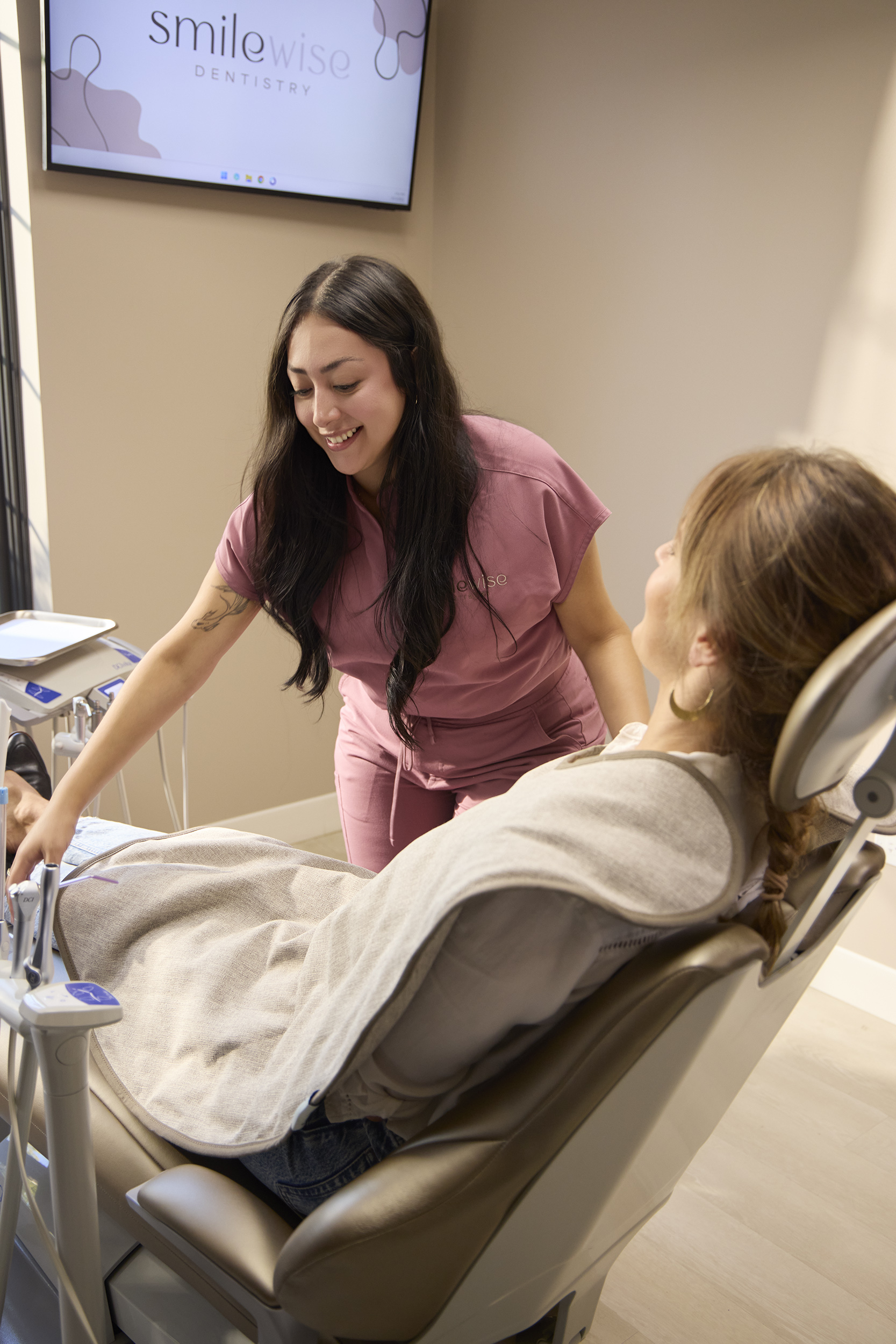
Dental Anxiety in Elmhurst: How SmileWise Makes Nervous Patients Feel Safe

Early Orthodontic Treatment in Elmhurst, IL: When Should Your Child Start?

Kids' Airway Screening in Elmhurst, IL — Catching Growth & Breathing Problems Early | SmileWise Dentistry
