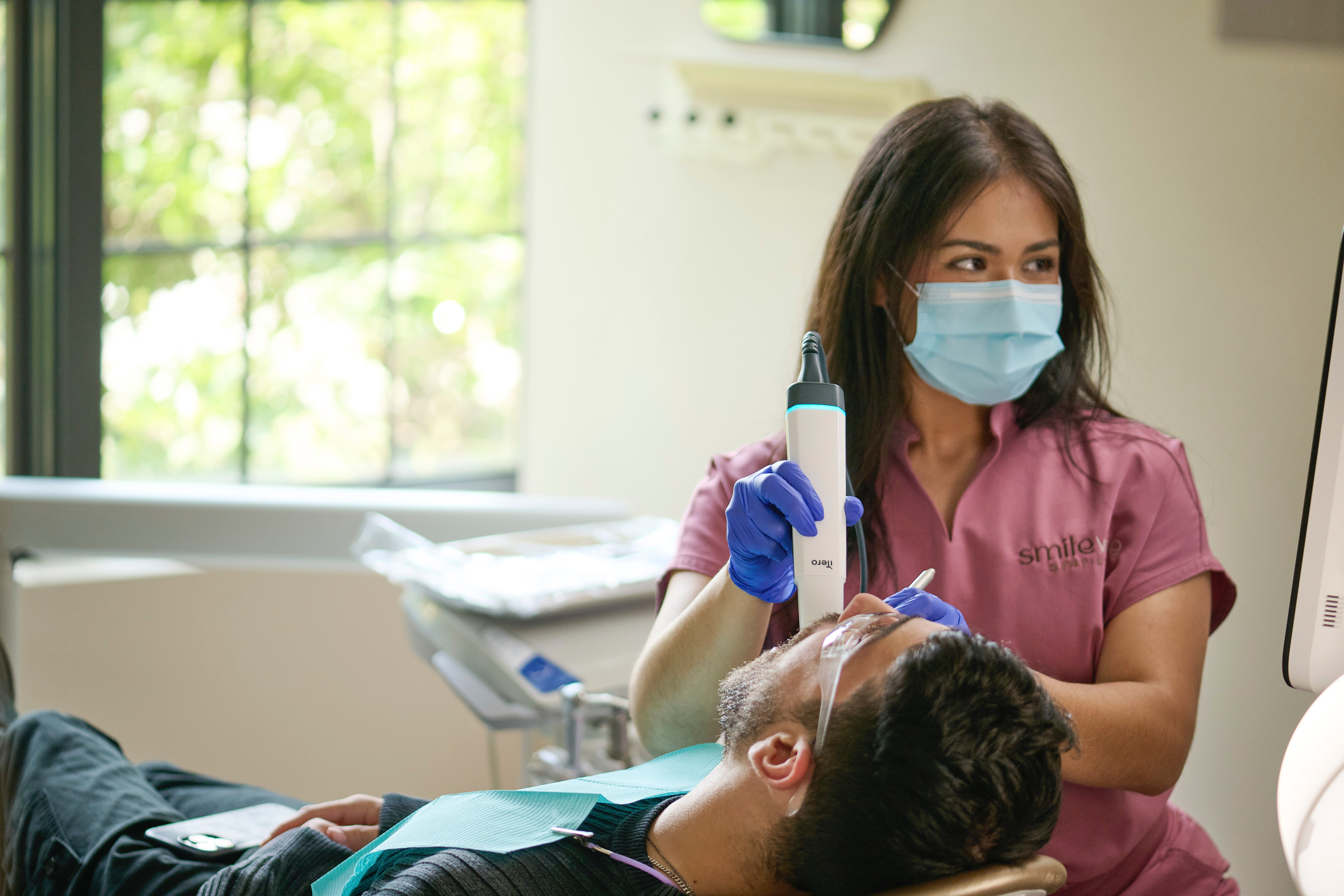
Teeth Grinding and Snoring in Elmhurst, IL: Are They Signs of an Airway Problem?
If you wake up with a tight jaw, a dull headache, or a partner who says you sound like a freight train, you may have shrugged it off as stress or "just how you sleep." Those two problems, teeth grinding and snoring, are often treated separately. Sometimes they are connected.
At SmileWise Dentistry in Elmhurst, Dr. Reem Akel, DDS looks at your teeth and your airway together. This guide is for adults in Elmhurst, Oak Brook, Villa Park, Lombard, Addison, and across DuPage County who grind, clench, or snore and want to know what it could mean, and what to do about it.
What Is Teeth Grinding (Bruxism)?
Bruxism is the clinical term for grinding or clenching your teeth. It can happen while you are awake, often during concentration or stress, or during sleep, when you usually have no idea it is happening.
Common signs include:
- Waking with a sore, tight, or tired jaw
- Morning headaches, especially around the temples
- Flattened, chipped, or worn teeth
- Teeth that feel sensitive to cold or pressure
- Cracked fillings or crowns that keep needing repair
- Indentations along the edge of your tongue or ridges along your inner cheeks
- A partner who hears grinding at night
Many people only find out they grind when a dentist points out the wear. That is one reason regular exams matter. Our guide on how often you should really see the dentist explains why.
Why Do People Grind Their Teeth?
There is rarely a single cause. Stress and anxiety are well-known contributors. So are caffeine, alcohol, certain medications, and a bite that does not come together comfortably.
Another factor gets less attention: how you breathe while you sleep.
Research has found an association between sleep bruxism and sleep-disordered breathing, including obstructive sleep apnea. Studies of people who grind at night have found that many also snore or have breathing pauses, and some researchers suggest grinding may be one way the body responds when the airway narrows during sleep. The relationship is still being studied, and not everyone who grinds has an airway problem. But it is a strong enough clue that it deserves a question.
The Snoring Connection
Snoring happens when tissues in the throat vibrate as air moves past a narrowed airway. Occasional snoring is common and often harmless. Frequent, loud snoring can sometimes be a sign of obstructive sleep apnea, a condition in which breathing repeatedly pauses or becomes shallow during sleep.
Signs that snoring may be more than a nuisance:
- Loud, frequent snoring most nights
- Gasping, choking, or pauses in breathing noticed by a partner
- Waking with a dry mouth or sore throat
- Feeling unrefreshed after a full night of sleep
- Daytime sleepiness, brain fog, or trouble concentrating
- Frequent nighttime bathroom trips
- Morning headaches
Only a physician can diagnose sleep apnea, typically through a sleep study. But dentists see your mouth, jaw, tongue, and bite up close, which puts them in a good position to notice the early clues and refer you appropriately.
What an Airway-Focused Dentist Notices
Most dental exams focus on cavities and gums. An airway-focused exam also pays attention to how your mouth and jaw are built and how they function. At SmileWise, that can include looking at:
- Wear patterns on your teeth that suggest grinding or clenching
- Tongue size and posture, and scalloped edges on the tongue
- The shape and width of your upper jaw and palate
- Jaw position and how your teeth meet
- Tonsil and throat space that may be visible during the exam
- Signs of mouth breathing, such as dry tissues or inflamed gums
- Jaw joint comfort and movement, which ties into our TMJ approach
We also listen. Your answers about sleep, energy, snoring, and morning symptoms are as important as anything we see in your mouth. For a closer look at this way of practicing, read Is your dentist checking your airway?
Why a Night Guard Alone May Not Be the Whole Answer
A custom night guard (also called an occlusal splint) can be very helpful. It cushions your teeth, spreads out biting forces, and can protect crowns, fillings, and natural enamel from further wear. For many people, it is a sensible part of the plan.
But a night guard protects your teeth; it does not necessarily address why you are grinding. If an airway issue is part of the picture, covering the teeth without asking about breathing may miss something important. In some cases, a guard that changes jaw position can even be a poor fit for someone who is being evaluated for sleep apnea, which is why the screening conversation matters.
That is the SmileWise difference: we aim to protect your teeth now and ask the bigger question about the cause.
What Happens If Grinding Goes Untreated?
Over years, grinding can lead to:
- Worn, flattened, or chipped teeth
- Cracked teeth that may need a crown or other repair
- Failing fillings and restorations
- Gum recession and tooth sensitivity
- Jaw pain, clicking, and headaches (see our TMJ treatment guide)
- Higher cost and more extensive dental work later
Catching it early is usually simpler, gentler, and less expensive than repairing the damage afterward.
What to Expect at a SmileWise Visit
You will not be rushed, and you will not be lectured. Here is what a visit usually looks like:
- A conversation about your symptoms. Jaw pain, headaches, sleep quality, snoring, stress, and medications.
- A thorough exam. Teeth, gums, bite, jaw joints, muscles, tongue, and soft tissues.
- A plain-language explanation. We show you what we see and what it may mean.
- A plan that fits you. Options may include a custom night guard, bite or restorative care, habits and stress strategies, or an airway-focused next step.
- Coordination when needed. If your symptoms suggest sleep apnea, we will refer you to your physician or a sleep specialist for testing. When appropriate, a dentist-made oral appliance can be one treatment option, as described on our sleep apnea oral appliance page.
Feeling uneasy about dental visits in general? Read how we help nervous patients feel safe.
Simple Things You Can Do Starting Tonight
While you are deciding on next steps, these habits can help:
- Cut back on caffeine and alcohol in the evening, which can worsen grinding and disrupt sleep
- Build a wind-down routine to help your jaw and mind relax before bed
- Notice daytime clenching. Teeth should rest slightly apart with lips together and the tongue resting gently on the roof of the mouth
- Avoid chewing gum and pen caps, which keep jaw muscles working
- Apply a warm compress to a sore jaw in the morning
- Track your sleep. Write down snoring, dry mouth, and how rested you feel, then bring the notes to your visit
These are comfort measures, not a substitute for an exam.
Why Elmhurst Patients Choose SmileWise
- We connect the dots. Teeth, jaw, and airway are part of one system.
- Airway-focused care is our differentiator. It is a core part of how we practice, not an add-on. See our wellness approach versus traditional dentistry.
- Credentialed care. Dr. Akel is a graduate of VCU School of Dentistry, Invisalign certified, Botox certified, and a member of the American Academy of Clear Aligners. Learn more about Dr. Akel.
- Clear explanations. You will understand the "why" before any decision.
- A calm, welcoming office at 623 W North Ave, convenient for Elmhurst, Oak Brook, Villa Park, Lombard, and Addison.
Frequently Asked Questions
Is teeth grinding related to snoring?
Sometimes. Research has found an association between sleep bruxism and sleep-disordered breathing, including snoring and obstructive sleep apnea. Not everyone who grinds has an airway problem, but grinding plus loud snoring, dry mouth, or unrefreshing sleep is worth discussing with a dentist and physician.
Can a dentist treat teeth grinding?
Yes. A dentist can examine wear patterns, check your bite and jaw joints, and recommend options such as a custom night guard or restorative care. An airway-focused dentist will also ask about snoring and sleep, and refer you for testing if a breathing problem seems possible.
Will a night guard stop me from grinding?
Not necessarily. A night guard protects your teeth from wear and damage but may not stop the grinding itself. If an underlying cause such as stress or disrupted breathing is involved, addressing that cause matters too. Your dentist can help you decide what fits.
How do I know if my snoring is sleep apnea?
You cannot tell from snoring alone. Warning signs include loud, frequent snoring, gasping or pauses in breathing, morning headaches, and daytime sleepiness. A physician diagnoses sleep apnea, usually with a sleep study. A dentist can screen for clues and help you take the next step.
What are the signs I grind my teeth at night?
Common signs include a sore jaw or headache in the morning, flattened or chipped teeth, tooth sensitivity, cracked fillings, and a partner who hears grinding. Many people have no idea they grind until a dentist spots the wear during an exam.
Does SmileWise offer oral appliances for sleep apnea?
Dr. Akel's airway-focused approach includes oral appliance therapy when appropriate. Sleep apnea must first be diagnosed by a physician. If you have a diagnosis, or suspect one, call (630) 415-0800 to talk through whether an oral appliance could be a good fit.
Ready for Answers, Not Just a Guard?
If you grind, clench, or snore, you deserve more than a guess. Dr. Reem Akel and the SmileWise team will look at the whole picture and explain it clearly.
Schedule your visit today:
🌐 smilewise-dentistry.com/contact
📍 623 W North Ave, Suite 1-2E, Elmhurst, IL 60126
📞 (630) 415-0800
We welcome patients from Elmhurst, Oak Brook, Villa Park, Lombard, Addison, and throughout DuPage County.
This article is for educational purposes and is not a substitute for personalized dental or medical advice. Only a physician can diagnose sleep apnea.
Related Posts
Teeth Grinding and Snoring in Elmhurst, IL: Are They Signs of an Airway Problem?
Dental Anxiety in Elmhurst: How SmileWise Makes Nervous Patients Feel Safe

Early Orthodontic Treatment in Elmhurst, IL: When Should Your Child Start?